Follow Me On Social Media!

Coconut Pound Cake: The Best Slice of Tropical Bliss

Introduction to Coconut Pound Cake
Coconut pound cake is a delightful treat that encapsulates the spirit of a tropical getaway, even if you’re just enjoying a slice at home. The very first bite transports you to sun-drenched beaches, where the aroma of fresh coconut fills the air. This cake is not just a simple dessert; it’s an experience, a way to indulge your senses with its rich flavor and tender crumbiness. Each slice invites you to savor the nostalgia of summer vacations or family gatherings where laughter lingers in the warmth of the sun.
What makes Coconut Pound Cake so special? It’s the harmonious blend of sweet and savory that creates a symphony of flavors. The use of coconut, whether in the form of milk, flakes, or extract, infuses the cake with a tropical essence that captivates the palate. Unlike many cakes that rely heavily on massive amounts of frosting, this pound cake stands proudly on its own merits. It’s dense yet moist, making it the perfect companion to a steaming cup of coffee or even as a standout at your next potluck.
Many bakers tout their secret ingredients, but the true magic lies in using quality ingredients and a little patience. As you mix the batter, you’ll notice how the distinct texture of coconut creates a beautiful balance with the richness of butter. While tradition might lean on the classics, coconut pound cake shakes things up by introducing an unexpected twist, appealing to both the old-fashioned baker and the adventurous gourmet.
If you’re eager to share a slice of paradise with friends and family, this cake is as easy to whip up as it is to enjoy. The beauty of coconut pound cake is that it can be dressed up with a light glaze or served plain, letting the flavors speak for themselves. You’re not just baking; you’re creating lasting memories, one delicious slice at a time.
What Makes Coconut Pound Cake So Special?
Coconut pound cake is not just about the taste; it’s about the experience of enjoying a home-baked delight. The unique texture and flavor profiles keep it relevant across all generations. What better way to celebrate the beauty of baking and the joy of sharing than with a cake that brings everyone together? With each bite, you’re not only tasting the coconut but also celebrating the moments that matter most.

Key Ingredients for Coconut Pound Cake
Coconut pound cake captures the essence of tropical bliss in every bite. When I first experienced this cake, I was transported to a sunlit beach, where the gentle waves met the soft, creamy richness of coconut. Crafting this delicious treat is straightforward, but every ingredient plays a vital role in achieving that delightful texture and flavor.
-
Coconut: For that authentic coconut flavor, I recommend using unsweetened shredded coconut. It gives the cake a rich and nutty depth. If you prefer a sweeter profile, sweetened coconut works too, but be mindful of the sugar balance in the recipe.
-
Butter: In my experience, real butter makes all the difference. It not only adds a rich flavor but also contributes to the cake’s soft, tender crumb. Make sure it’s softened to room temperature for easy blending.
-
Sugar: I opt for granulated sugar for a lovely sweetness that doesn’t overpower the delicate coconut flavor. The sugar helps create that signature crust on top, giving you a wonderful contrast in texture.
-
Eggs: Eggs provide moisture and stability in this pound cake. Beating them well incorporates air, aiding in the cake’s overall rise and lightness.
-
Flour: All-purpose flour works best here. It provides structure while allowing the coconut flavor to shine through.
-
Baking Powder: This crucial ingredient ensures that your cake rises beautifully, giving it that perfect pound cake height.
With these key ingredients, your coconut pound cake will not only taste heavenly but also be a crowd-pleaser at any gathering!
Why You’ll Love This Coconut Pound Cake
Who would have thought that a simple coconut pound cake could transport you to a tropical paradise? Picture this: on a sun-soaked afternoon, you’re slicing into a dense, buttery cake that’s bursting with the rich, sweet flavor of coconut. It’s a comforting treat that perfectly balances decadence and a hint of nostalgia.
Let’s talk about the texture. This cake is delightfully moist and has a tender crumb that just melts in your mouth with every bite. The coconut not only enhances the flavor but also adds a lovely chewiness that delights the senses. Plus, it’s straightforward to whip up, making it a perfect choice for both novice bakers and seasoned pros.
Whether you enjoy it alongside coffee in the morning or as a sweet end to a busy day, this coconut pound cake is incredibly versatile. Serve it plain, or dress it up with a sprinkle of powdered sugar and a side of fresh fruit for a dash of color and freshness.
Finally, don’t overlook its charm at gatherings! Imagine surprising your friends with a homemade cake that makes them feel like they’re on a tropical vacation. This cake isn’t just a dessert; it’s a moment—a slice of joy in every bite.
Variations of Coconut Pound Cake
Coconut pound cake is not just a delightful dessert; it’s an avenue for creativity! Whether you’re experimenting for a special occasion or simply want to try a new twist, there are several delicious variations to give your coconut pound cake a unique flair.
Tropical Paradise Twist
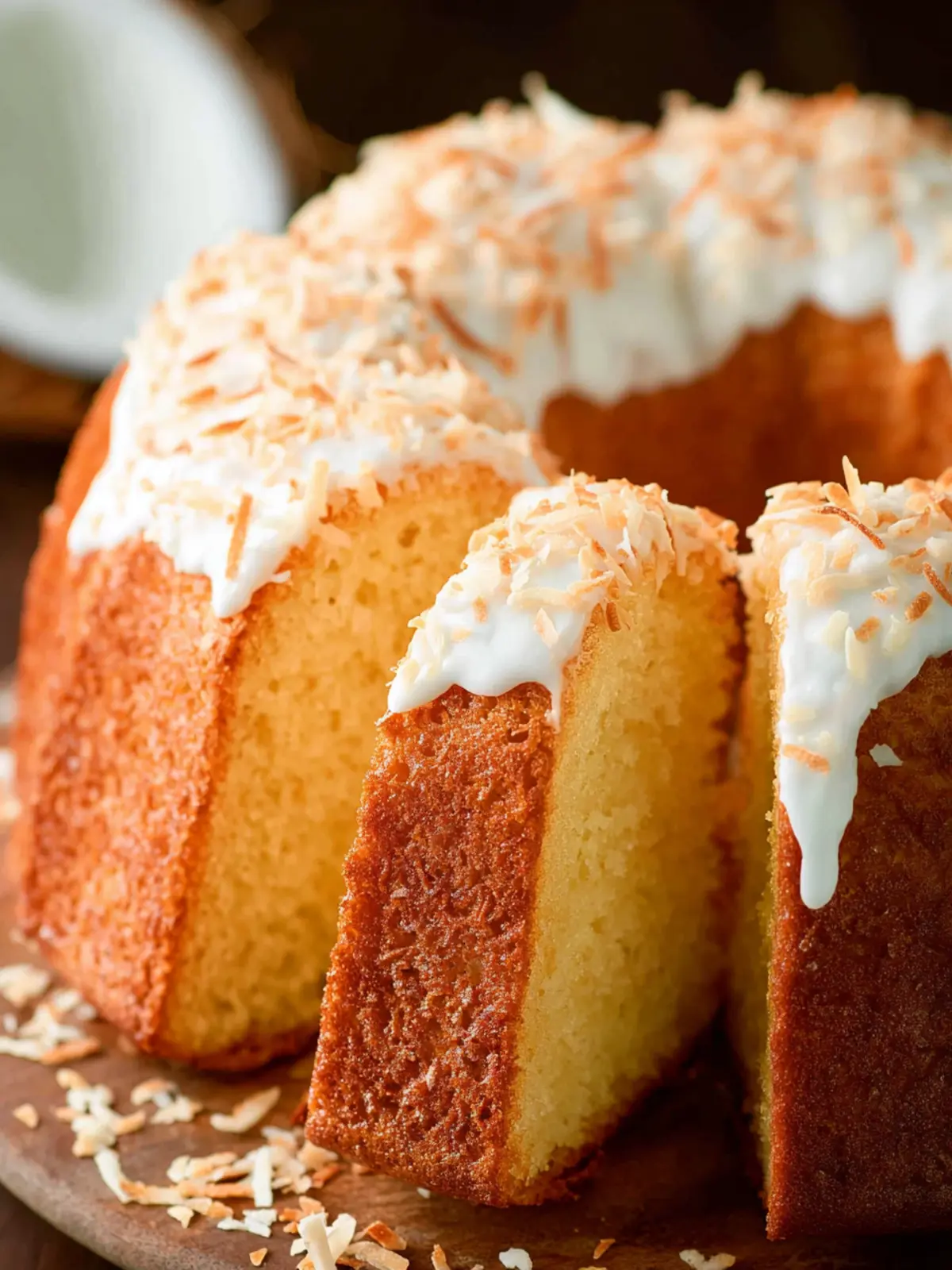
Think of adding a splash of tropical flavors. Incorporate mango puree or lime zest into the batter for a refreshing contrast to the rich coconut. A sprinkle of toasted coconut flakes on top not only enhances flavor but provides a beautiful presentation.
Chocolate Coconut Fusion
If you’re a chocolate lover, consider swirling in some melted chocolate or adding cocoa powder to your coconut pound cake batter. This decadent combination balances the sweetness of the coconut with rich chocolate, creating an indulgent treat.
Coconut Almond Delight
Replace some of the vanilla extract with almond extract to infuse your coconut pound cake with a nutty aroma. Pair it with slivered almonds either mixed into the batter or sprinkled on top. This adds a delightful crunch and a sophisticated flavor profile.
Citrus Coconut Medley
For a refreshing kick, why not mix in some lemon or orange zest? The citrus notes will brighten the coconut flavor, making it even more vibrant, perfect for spring gatherings or summer picnics.
With these delightful variations, your coconut pound cake can transition from a beloved classic to an exciting, innovative dessert. Let your imagination run wild and explore the endless possibilities!
Cooking Tips and Notes
When it comes to baking an incredible coconut pound cake, precision and a few tips can take your creation to the next level. Here are some insights I’ve gathered over the years that will help ensure your cake is a success.
Key Ingredients Matter
-
Fresh Coconut vs. Desiccated Coconut: I highly recommend using fresh coconut for that authentic tropical flavor. The texture and moisture it adds is unmatched. If fresh isn’t on hand, desiccated coconut will do, but consider soaking it in warm water for about 10 minutes to bring it back to life.
-
Butter Quality: Using high-quality unsalted butter makes a difference in taste. It not only adds richness but also helps to create a beautiful crumb texture.
Mixing Techniques
-
Creaming Butter and Sugar: Don’t rush this step! Cream them together for at least 3-5 minutes until the mixture is light and fluffy. This incorporates air, which contributes to a lighter cake.
-
Incorporating Eggs: When adding eggs, allow them to come to room temperature first. This helps them blend more smoothly into the batter.
Baking Temperature and Time
-
Oven Temperature: Always preheat your oven for at least 15 minutes. Proper heat is crucial for the rise and even baking of your coconut pound cake.
-
Testing for Doneness: Instead of just relying on time, use a toothpick to check if your cake is done. Insert it into the center, and if it comes out clean or with a few moist crumbs, it’s ready.
Implementing these tips will help you create a coconut pound cake that’s not only delicious but also a memorable treat to share with friends and family.

Serving Suggestions for Coconut Pound Cake
There’s something undeniably special about a slice of coconut pound cake, its rich flavor and moist texture creating a delightful experience with every bite. As you prepare to serve this delicious cake, consider these creative pairing ideas that elevate its flavors and presentation.
Fresh Fruit Compote
A vibrant fruit compote adds a refreshing contrast to the dense, sweet notes of coconut. You can use tropical snacks like mango, pineapple, or berries. Simply simmer your chosen fruits with a sprinkle of sugar and a splash of lemon juice for a bright topping that enhances the cake beautifully.
Whipped Cream or Coconut Cream
A dollop of airy whipped cream or luscious coconut cream can take your coconut pound cake to new heights. The creamy richness balances the cake’s texture and adds a light touch that many will crave. Add a hint of vanilla for an extra flavor boost.
Coffee or Tea Pairing
Pair your cake with a cup of freshly brewed coffee or herbal tea. The subtle bitterness of coffee perfectly complements the sweetness of the cake, while a light, floral tea can bring out the coconut flavor.
Whether you’re hosting a gathering or enjoying a quiet moment at home, these serving suggestions will enhance your experience of coconut pound cake and make your dessert truly unforgettable.
Time Breakdown for Coconut Pound Cake
Preparation Time
Crafting a coconut pound cake is a delightful journey, and you’ll need about 20 minutes to gather your ingredients and whip up that wonderful batter. During this time, be sure to preheat your oven to ensure an even bake for your cake’s golden crust.
Baking Time
Once your batter is ready, pour it into the prepared pan and pop it into the oven. The baking usually takes around 60 to 70 minutes. Keep an eye on it as it rises and transforms into a heavenly treat.
Total Time
In total, you’ll be looking at about 80 to 90 minutes from start to finish. But trust me, every minute spent waiting is completely worth it when you’re enjoying that first slice of moist, rich coconut pound cake.
Nutritional Facts for Coconut Pound Cake
Indulging in a slice of coconut pound cake isn’t just about its delightful flavor; it’s also essential to understand its nutritional profile. Here’s a closer look at what makes this cake both a treat and a fulfilling option for dessert lovers.
Calories
A typical serving of coconut pound cake contains around 350 calories. While it’s certainly not a low-calorie option, moderation is key, and enjoying a slice occasionally can fit well within a balanced diet.
Sugars
This cake has about 30 grams of sugars per slice, predominantly from the added sugar and the natural sweetness of coconut. This sweetness is what elevates the dessert, lending it that irresistible tropical flair.
Saturated Fat
With approximately 15 grams of saturated fat, largely derived from butter and coconut, the richness of coconut pound cake is undeniably satisfying. However, it’s wise to savor this indulgence in moderation for heart health.
Nutrition should never compromise flavor, and this coconut pound cake beautifully balances both!
FAQs about Coconut Pound Cake
*The enchanting flavors of a *coconut pound cake* can turn any ordinary moment into a celebration.* If you’re eager to dive deeper into the baking process, here are some frequently asked questions to guide you.
How do I know when my Coconut Pound Cake is done baking?
Knowing when your coconut pound cake is perfectly baked can make all the difference. Generally, the cake should:
- Be golden brown on top
- Spring back lightly when touched
- Have a toothpick inserted into the center come out clean or with just a few crumbs attached
Keep an eye on the cake during the last 10 minutes of baking. If the top starts to darken too much, you can loosely cover it with aluminum foil to prevent over-browning.
Can I freeze Coconut Pound Cake?
Yes! One of the fantastic features of coconut pound cake is its ability to be frozen without losing flavor or texture. Just follow these steps for storage:
- Allow the cake to cool completely.
- Wrap it tightly in plastic wrap, ensuring no air is trapped inside.
- Place it in an airtight container or a freezer bag for added protection.
Thaw the cake in the refrigerator overnight before serving; this will help maintain its moistness.
What are some good toppings for Coconut Pound Cake?
While coconut pound cake is delicious on its own, adding toppings can elevate it even further. Consider:
- A drizzle of coconut cream or glaze for added sweetness
- Fresh fruit like mango or berries for a tropical twist
- Whipped cream topped with toasted coconut flakes for texture
- A dusting of powdered sugar for an elegant finish
These toppings not only enhance flavor but also make your dessert visually appealing. Happy baking!
Conclusion on Coconut Pound Cake
As you wrap up your journey of creating a delightful coconut pound cake, it’s important to remember how each ingredient plays a vital role in building texture and flavor. The blend of buttery richness and tropical coconut creates a moist, satisfying cake perfect for any occasion. This cake’s versatility allows it to shine at gatherings or simply serve as a comforting treat on a quiet afternoon. With a few simple steps, you can enjoy a slice of paradise right at home. Don’t forget to share your creation with friends; their smiles will be the sweetest reward!
Print
Coconut Pound Cake
- Total Time: 1 hour 40 minutes
- Yield: 10 servings 1x
- Diet: Vegetarian
Description
A delicious coconut pound cake, perfect for any occasion and topped with a sweet glaze.
Ingredients
Scale
- 1 ½ cups butter (room temperature)
- 8 ounces cream cheese (room temperature)
- 3 cups sugar
- 6 large eggs
- 3 cups all-purpose flour
- ¾ cup milk
- 1 ½ cups shredded coconut
- ½ teaspoon salt
- 1 teaspoon vanilla extract
- 1 teaspoon coconut extract
- 1 cup powdered sugar
- 1 tablespoon milk
- ½ teaspoon coconut extract
Instructions
- Preheat oven to 350 degrees F.
- Grease and flour a 9-10 cup bundt cake pan and set aside.
- In a large bowl with an electric mixer, whip together the butter, cream cheese and sugar until light and fluffy, or about 3-5 minutes.
- Slowly add the eggs, mixing after each addition and scraping down the sides as necessary to make the mixture smooth.
- Add the flour and mix on low speed until almost completely combined.
- Finally, add the milk, salt, shredded coconut, vanilla extract, and coconut extract. Mix and transfer to the prepared pan.
- Bake in the preheated oven for about 1 hour and 20 minutes, or until a toothpick inserted into the center comes out clean.
- Once finished, remove the cake from the oven and let cool for 5-10 minutes.
- Put a plate or serving dish on the top of the bundt cake pan and flip the cake onto the serving plate to cool completely.
- In the meantime, make the glaze by whisking together the powdered sugar, milk and coconut extract in a large bowl. Add more milk if necessary to reach your desired consistency.
- Drizzle the glaze over the cooled pound cake and sprinkle with toasted coconut if desired.
- Let the glaze set up before slicing to serve with a dollop of whipped cream, fresh raspberries or a scoop of ice cream. Enjoy!
Notes
- For a richer coconut flavor, use coconut milk in place of regular milk.
- Serve with fresh fruit for a delightful dessert.
- Prep Time: 20 minutes
- Cook Time: 80 minutes
- Category: Dessert
- Method: Baking
- Cuisine: American
Nutrition
- Serving Size: 1 slice
- Calories: 450
- Sugar: 35g
- Sodium: 200mg
- Fat: 25g
- Saturated Fat: 15g
- Unsaturated Fat: 8g
- Trans Fat: 0g
- Carbohydrates: 60g
- Fiber: 1g
- Protein: 6g
- Cholesterol: 120mg